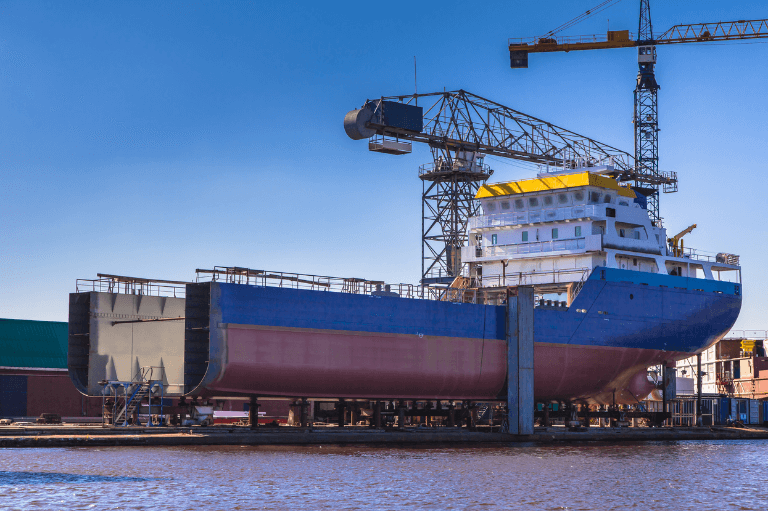
Choosing a profession that many still label a “man’s job” takes determination. Shipbuilding has long been seen as one of the most male-dominated industries in the world. Yet the reality on shipyard floors is slowly changing.
While men still make up the majority of workers, more and more women are stepping into roles traditionally associated with heavy industry. This International Women’s Day, we share the stories of several Lithuanian women working in some of Europe’s largest shipyards – about stereotypes, daily life at work and the pride that comes with building ships.
When Work Brings the Family Together
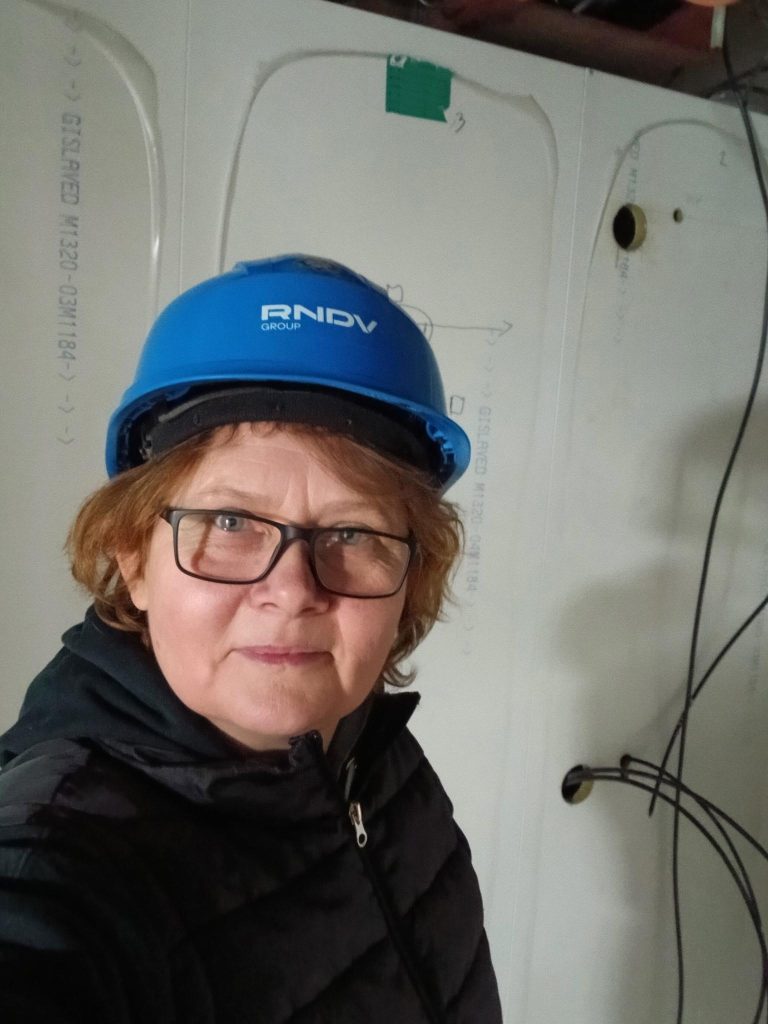
Alma Smirnova works as an electrical installer at a shipyard in Germany. For her, working in a predominantly male team comes with clear advantages.
Communication is direct and practical, she says, and when something heavy needs lifting, help is never far away.
Her path into shipbuilding was closely connected to family. Alma’s husband works in the same shipyard as a welder, and one of their sons is also part of the international group of companies RNDV. With their children already grown up, the opportunity to live and work abroad while staying close as a family became a strong motivation.
“When work brings the family closer together, it gives the job a completely different meaning,” she says.
Contrary to what many people assume, Alma notes that the work is not as physically demanding as it may seem. Skills can be learned, and teamwork makes the job easier. Tasks that require precision and attention to detail – particularly working with smaller wires and cables – are often areas where women perform exceptionally well.
Her team includes colleagues from many different countries, something she sees as a major advantage. Adapting to different cultures comes naturally, and communication rarely becomes a barrier.
But the biggest benefit of the job, she says, is that it never feels repetitive. Every project, team and experience is different.
Alma is convinced that many more women could succeed in electrical installation work and encourages others not to hesitate when considering this career path.
Confidence in a Male-Dominated Environment
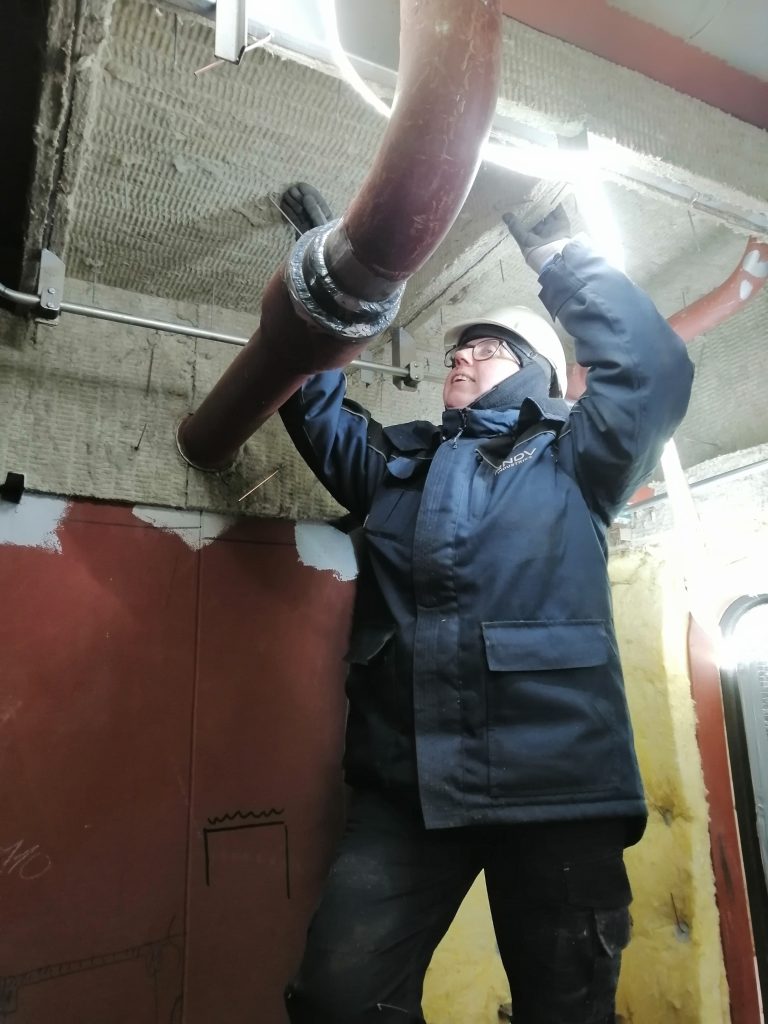
Daiva Mikalauskienė works in Norway as an insulator. Looking back, she has no doubts about her career choice, although she admits the beginning can feel intimidating.
In reality, she says, most newcomers need only a few weeks to understand the specifics of the work and start contributing to projects of varying complexity.
Her daily tasks involve installing insulation materials on ships – from cruise liners to smaller vessels. Physical strength, she explains, is far less important than curiosity, willingness to learn and persistence.
One of the most memorable experiences for Daiva has been working on cruise ships and witnessing the transformation from the earliest construction stages to the moment the ship sets sail for the first time.
“That’s when you truly see the result of your work,” she says. “And that feeling brings real pride.”
Having grown up with brothers, Daiva feels completely comfortable working in a male-dominated environment. Communication with colleagues is easy, and support is always there when needed. Foreign colleagues, she adds with a smile, are also generous with compliments.
What she enjoys most about the job is the international environment and the opportunity to travel. Projects in different countries mean constantly discovering new places and cultures.
Her advice to women considering a career change is simple: do not be afraid to try.
Encouraging More Women to Join
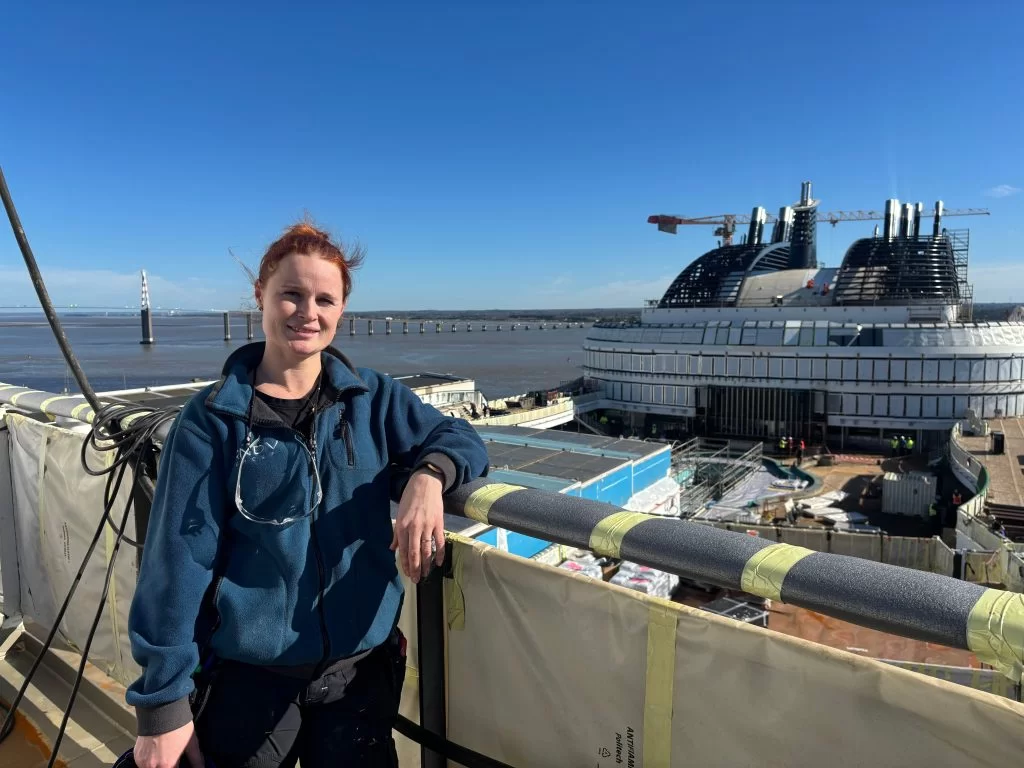
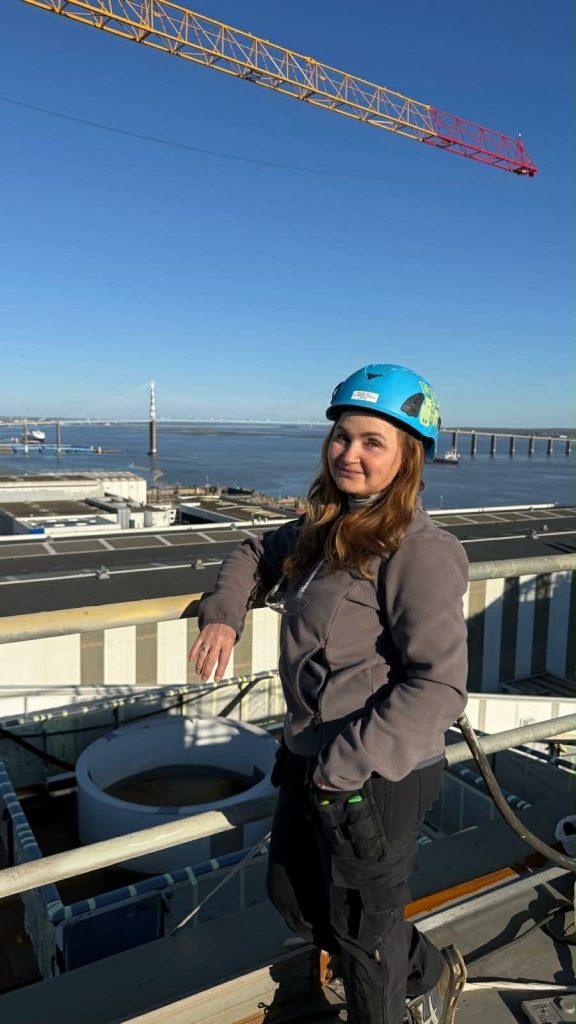
Lina Miklovienė has been living in France with her family for several years and works at Chantiers de l’Atlantique, Europe’s largest shipyard. For the past four years she has been installing cable systems on some of the world’s largest vessels.
She originally moved to France with her husband, and over time the shipyard naturally became part of her everyday life.
The complexity of her work depends on many factors – from cable thickness to installation locations and preparation. Although the work can be physically demanding, Lina takes pride in her abilities and notes that sometimes she can outperform some of her male colleagues.
Male coworkers, particularly those from the Philippines, often ask why she chose what many still consider a “man’s profession”. Her answer is straightforward: the job never becomes monotonous.
Every ship is different, and each project brings new challenges.
“The first cruise ship I worked on left the biggest impression on me,” she recalls. “It was an incredibly luxurious vessel, and I was involved in the project from the very beginning until the final stage.”
Even today, Lina’s family still follows a local tradition in Saint-Nazaire. Whenever a newly built ship leaves for its maiden voyage, residents gather by the pier to watch the departure.
“It’s a special moment for the whole town,” she says.
Working in an international team, Lina values friendliness, helpfulness and professionalism. She also notes that Lithuanian specialists are highly regarded in the shipyard for their reliability and strong work ethic.
While more women from France, Romania and other countries are joining shipbuilding, she believes there could still be more Lithuanian women – especially within the RNDV team.
A Profession That Matches Her Skills
Oksana Jančevskaja has also been working in France as an electrical installer for four years, alongside her husband. Her background is in electronics engineering, and she previously worked with microchips, making electrical and cable installation a natural continuation of her career.
She had already gained similar experience in Lithuania before moving abroad.
The work occasionally brings physical challenges – heavy cables or installations in difficult-to-reach areas – but Oksana says these moments are outweighed by the opportunities the profession provides.
Working in an international team, having stable employment and sharing everyday life abroad with her husband all make the effort worthwhile.
“Challenges pass,” she says. “But the pride in what you do stays.”
Oksana believes the number of women in shipbuilding will continue to grow and encourages curious and determined women to explore the profession for themselves.