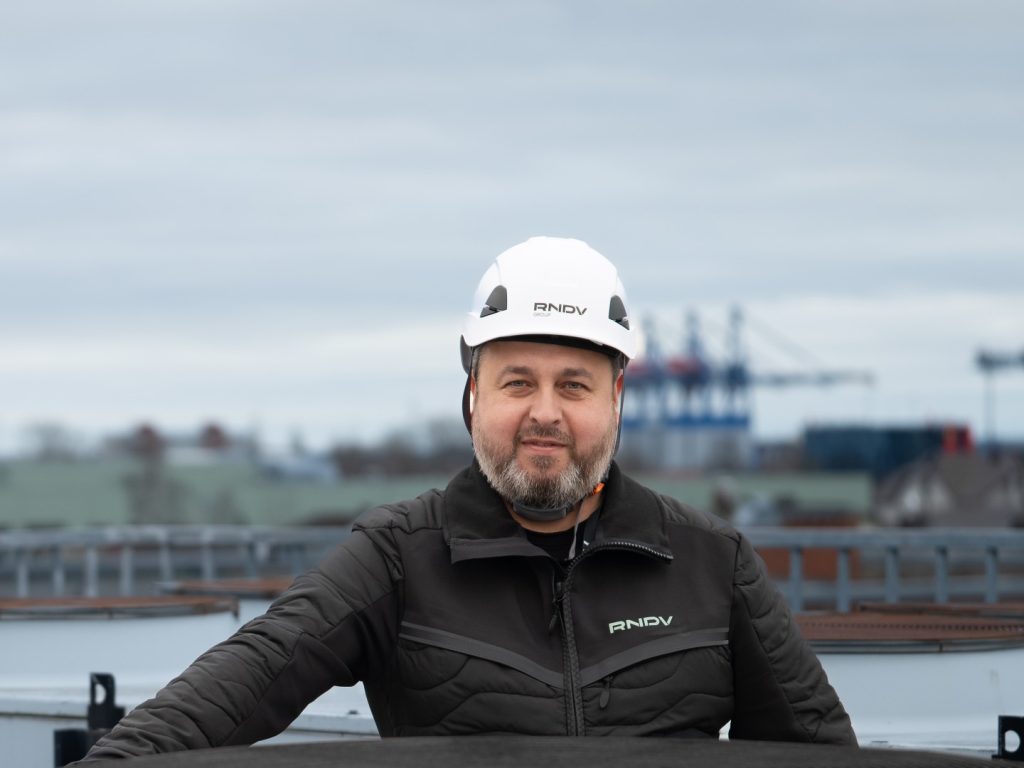
Three generations of Dmitrijus Blagodarenko’s family are connected to engineering. Having learned the nuances of the profession from his father, today he takes pride in his son’s career choice – and even in the opportunity to work side by side. Dmitrijus himself has built his career within the RNDV Group, gaining experience across different roles, working in several countries, contributing to diverse projects and allowing his ambitions to grow along the way. Today, he has no doubts – electrical engineering is the direction in which he continues to build his career.
– Your education is in agricultural energy engineering. Why did you choose this field?
– My father worked his entire life as an electrical site manager. When I was 15–16, I helped him prepare cost estimates; at 17, I visited a construction site with him for the first time. Initially, though, I decided to study higher mathematics. When I didn’t get accepted, I chose electrical engineering instead – but soon after, I left to work abroad. I returned with strong motivation to continue my studies, having realized that physical labor was not for me. I enrolled at the Academy of Agriculture, completed my degree, and later spent some time in a management role.
Because my parents are originally from Ukraine, the situation there affected me deeply on a personal level. Emotionally, that period was very difficult. I felt a strong need for change – to try something new and look for work related to my profession abroad.
I first started working as an electrical engineer in Germany. After just a few months, I knew I wanted to stay abroad longer. With each project, my ambitions grew – I wanted to take on more complex challenges and prove that I could lead. That’s how I joined the RNDV Group as a site manager and moved to Belgium.
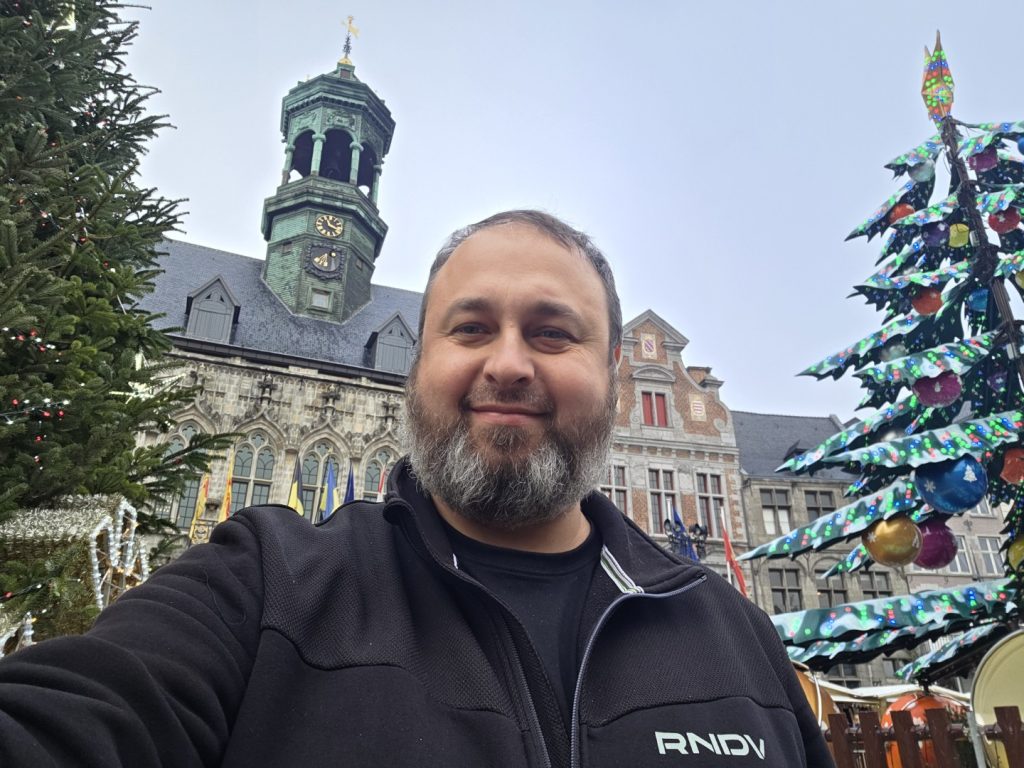
– Speaking of Belgium – does work there differ significantly from Lithuania in terms of organization, teamwork, and overall attitude?
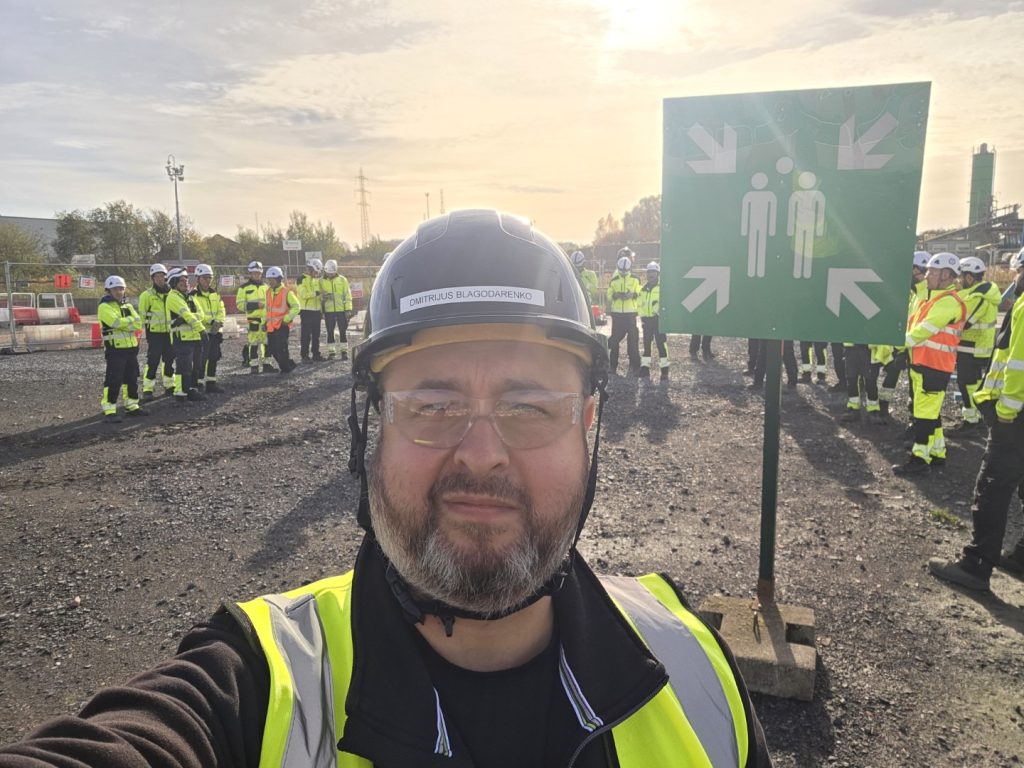
– From my perspective, the differences in work culture are substantial. After working abroad, I realized that moving from city to city, site to site suits me perfectly. The biggest difference, however, is the approach to occupational safety and the use of protective equipment.
Some people see strict safety rules as an obstacle to productivity. In reality, they are what prevent serious accidents and save lives.
I also appreciate the European style of communication and attitude toward employees and colleagues. Job titles matter less than continuous learning, deepening expertise, and professional growth. Yes, responsibilities and project scopes are significant, but respect is maintained at every stage.
– Engineers usually join projects once the building is already standing. Even so, your work is among the most dynamic.
– That’s true. First the structure is built, and only then do the internal engineering systems – electrical installations, in our case – begin. Electrical work is fascinating because it’s impossible to know every solution in advance. Things are constantly evolving, which makes the job even more interesting.
At one point, I even tried a leadership role on a cruise ship, though only for a short time. Not long after, I was invited back to RNDV as a site manager. Returning isn’t always easy, but in this case, trust mattered most to me – the company’s approach to work and its evaluation of employees based on results and responsibility.
– What were you aiming for in the next stage of your career?
– More challenges and greater responsibility. When I returned, I felt trusted and valued by my colleagues, and that was extremely important to me. When I first started working in Belgium, I was responsible for a team of 20–30 people. Today, I lead a team of 65.
Sometimes I joke that I work as a “coordinator” – I’m responsible for smooth workflows, integrating new team members, and ensuring responsibilities are taken on and fulfilled. And I genuinely enjoy it.
Over the years, I’ve gathered many valuable lessons. Now I focus on doing my job well and motivating the team by example. If the rules require wearing safety glasses on site, no one will ever see me without them. Whatever I expect from the team, I first demand of myself.
At the same time, I’m flexible. If a new colleague comes in with their own vision, knowledge, or perspective, I let them try and take responsibility for their decisions. Sometimes I even encourage people to step into new responsibilities and think long-term. I know many managers believe they always know best – but that’s not necessarily true.
– It’s not always easy to trust others and delegate tasks.
– I see it differently. What brings me the most satisfaction are the moments when colleagues truly shine. One excels at solving technical challenges, another convincingly justifies the best solution. The more difficult side of the job is dealing with people who lack a sense of responsibility. Working abroad, far from family, isn’t easy for everyone.
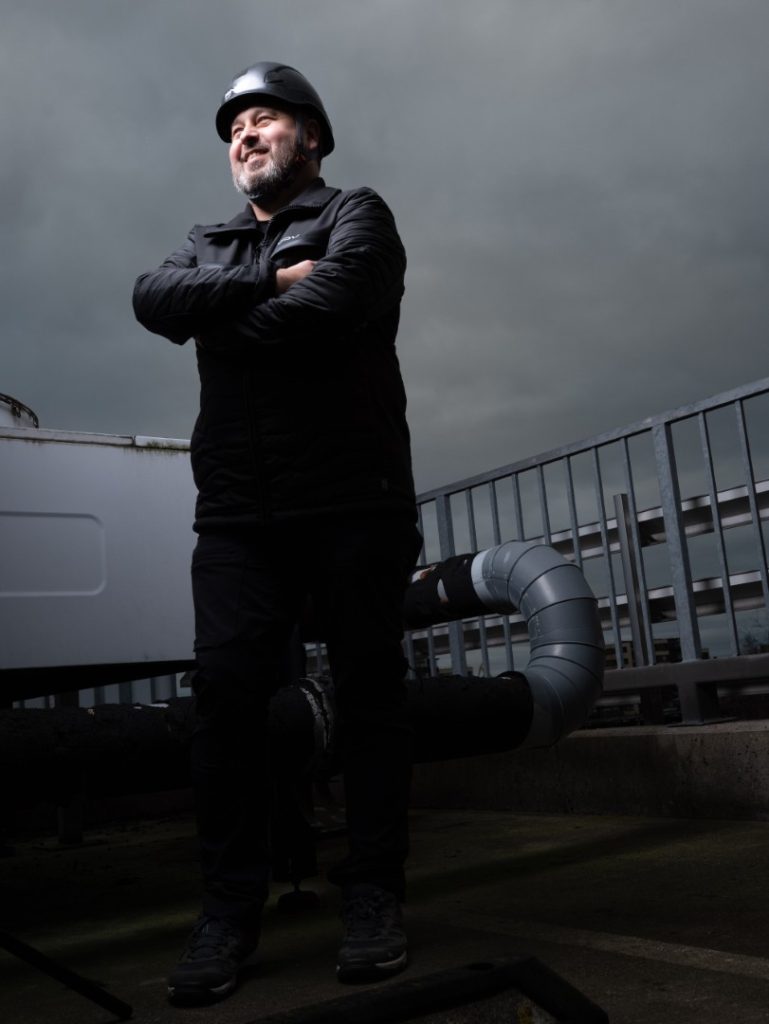
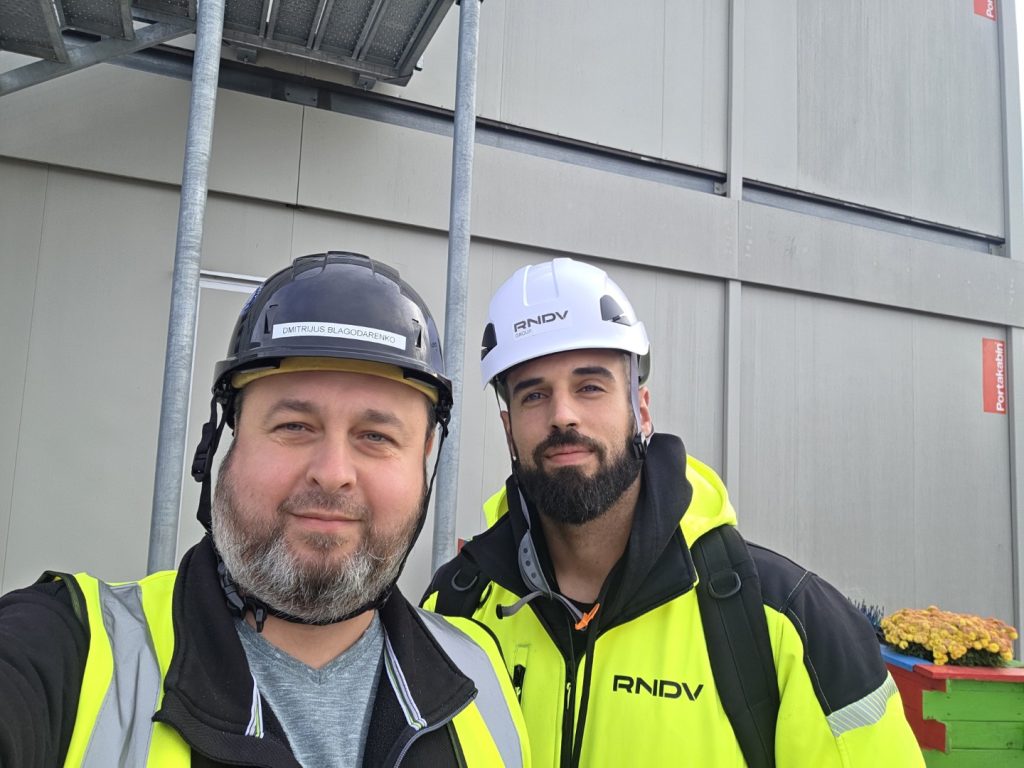
– When working abroad, family support must be especially important.
– Absolutely. Every time I leave, my wife tells me, “Go and work – we’ve got your back.” Having support instead of constant questioning makes it easier to focus on my professional goals. For that, I’m deeply grateful to my family.
My eldest son is studying Electrical Energy at Lithuanian Engineering College (Lietuvos inžinerijos kolegija). During his internship, he plans to come and work with me. I’m confident we’ll work very well together.
– Did you ever try to discourage your son from choosing electrical engineering? It’s often said that young people avoid engineering because it’s too difficult.
– If someone has an engineering mindset and does well in mathematics and physics, studying and working won’t feel overwhelming. Moreover, this profession is not only interesting – it’s becoming increasingly attractive and better paid.
About eight years ago, I considered learning programming, since programmers were in high demand and earning impressive salaries. Today, I’m glad I didn’t go down that path. The demand for electricians and electrical engineers continues to grow – just like salaries. My son has already tried this work during his internship, and I have no doubt his professional prospects are excellent.
– I understand that working at RNDV, freedom, professional growth, and responsibility are important to you.
– My father, when he worked as a site manager, often said: “This is my professional capital.” That stuck with me. I never hesitate to show initiative at work. Some might think it’s purely for career advancement – but it’s not. I genuinely enjoy helping. That’s how strong relationships and genuine trust within a team are built.